
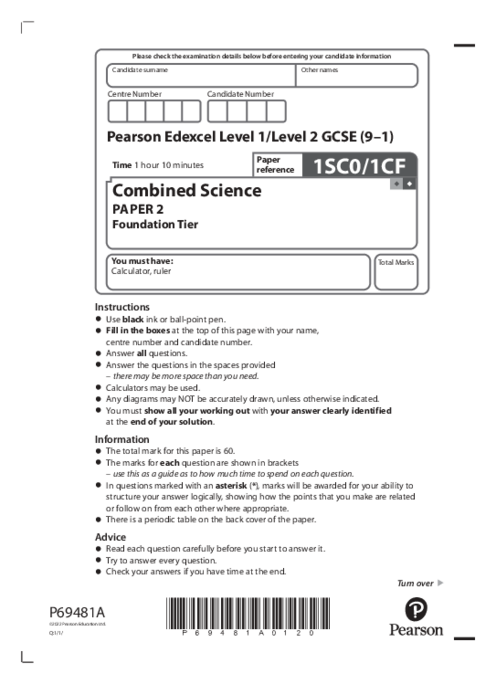
Combiend Science 1SC0/1CF May June 2022
omer uner
1. States of Matter and Energy Changes – Particle arrangement and movement in solids and liquids, melting of substances, and identifying chemical vs. physical changes.
2. Water Treatment and Purity – Stages of water purification (sedimentation, filtration, chlorination), importance of chlorine in disinfection, and differences between potable and pure water.
3. Atomic Structure and Periodic Table – Electron, proton, and neutron numbers in elements, calculating empirical formulas, group and period identification in the periodic table.
4. Chemical Reactions and pH Changes – Neutralization reaction of barium hydroxide and hydrochloric acid, pH scale application, and reaction rate interpretation through experimental data.
5. Electrolysis and Electrical Conductivity – Ion movement in sodium sulfate electrolysis, importance of inert electrodes, and how graphite conducts electricity.
6. Metals and Reactivity – Magnesium carbonate and acid reactions, gas identification tests, mass percentage calculations, and predictions of unknown element properties based on periodic trends.
See More Paper 2 a year ago
Combiend Science (1SC0) Subject directory
All resources in one place
Related Past Papers
Related Tutorials
Crash report