
Science 6th grade | UNIT 5: Electrical conductors and insulators 5.3 Do different metals conduct electricity equally well?
Measuring current
Current is the rate at which the electric charges flow. You will measure current in Activity 5.3.
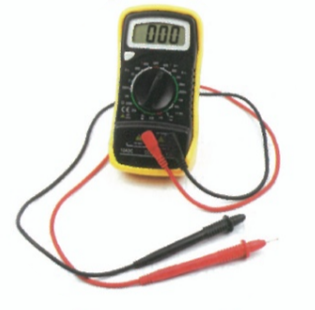
We measure current by the number of charges that flow through a point in a circuit in one second. We measure current in units called amperes or amps for short. We use an instrument called a multimeter to measure current. The multimeter has connectors.
Metals and alloys
Many objects are made of a combination of different metals. These are called alloys. Stainless steel is a mixture of iron, nickel and chromium. Brass is a mixture of copper and tin.
Activity 5.3 (Investigating how well metals conduct electricity)
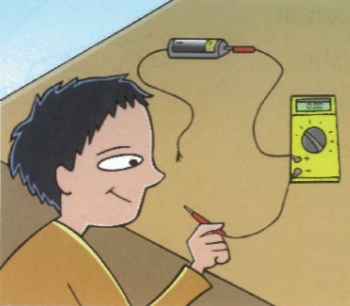
You will need: plastic-covered wire - sticky tape - a screwdriver - a 1.5V cell - a multimeter - some metal objects
Safety: Do not touch any bare electric wires.
This is your testing equipment to see how well metals conduct electricity. Before you begin, predict which metals will be the best conductors. Record your predictions in a table.
If the multimeter doesn't show a reading first time then check again. Record your results in a table.

Questions
1) Did all the metals conduct electricity?
2) Which metal was the best conductor? How did you know this was the best conductor?
3) How well did your results support your predictions?
4) What conclusion can you make from your results?
Challenge
Gold is a very good conductor of electricity. Why isn't gold wire used in circuits?